
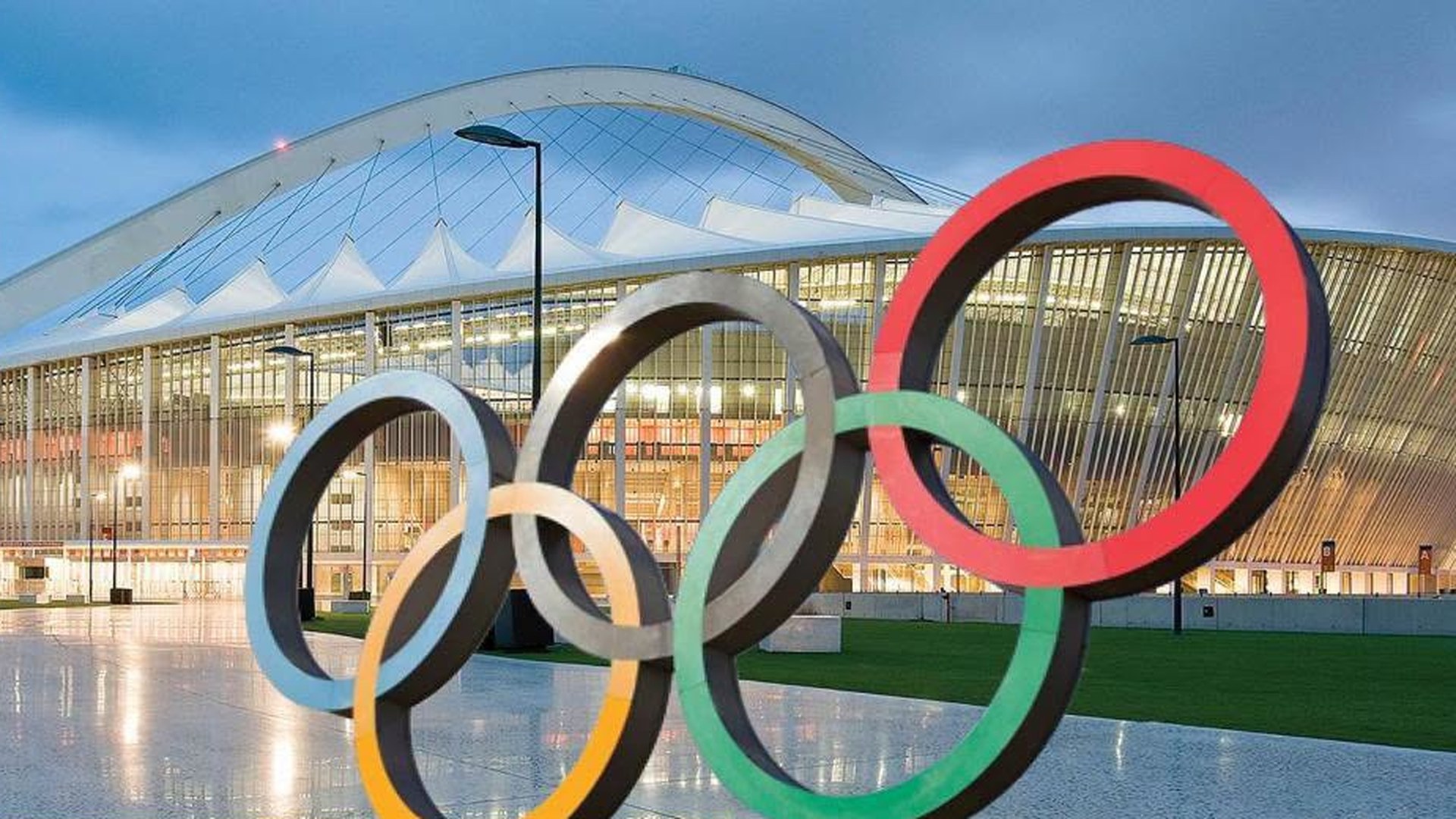
Durban Named South Africa’s Preferred City for the 2036/40 Olympic Bid: What It Means for Tourism
The South African Sports Confederation and Olympic Committee (SASCOC) has unveiled the beautiful coastal city of Durban as its preferred host to bring the Olympics to Africa for the first time. The announcement, made on 29 October 2026 at Olympic House in Johannesburg, places Durban at the centre of a Cabinet-backed bid for either the 2036 or 2040 Olympic and Paralympic Games.
It is important to be clear about what this is and is not. Durban has not been awarded the Games. It has been named the city South Africa will take into the International Olympic Committee’s (IOC) dialogue process, competing against strong international interest. Even so, the decision matters now: for tourism in KwaZulu-Natal, for investment in Durban, and for every business that welcomes visitors to this province.
What was announced
- Preferred city: Durban, selected ahead of Johannesburg and Cape Town after an independent evaluation panel reviewed proposals, presentations and venue visits.
- Government support: The national Cabinet has approved the bid.
- Model: A multi-city bid anchored in Durban, with some events likely staged in Johannesburg and Cape Town. SASCOC says Durban could accommodate around 65% of sports and venues in a compact area, and is envisaged as home to the Olympic Village and the opening and closing ceremonies.
- Approach: Heavy reliance on existing infrastructure, in line with the IOC’s emphasis on affordable, sustainable Games.
- Competition: Several countries have expressed interest in 2036, reportedly including India, Qatar, South Korea, Germany, Hungary and Turkey.
The road to 2036/40: the process step by step
The IOC no longer runs the old-style public bidding race. It uses a staged dialogue with interested countries before inviting a preferred candidate to a formal election. Based on SASCOC’s published timeline, the path looks like this:
- Preferred city named (29 October 2026). Durban confirmed as South Africa’s “interested party” city and communicated to the IOC ahead of the 31 October deadline.
- Presentation to the IOC Future Host Commission (November 2026). SASCOC presents the Durban concept: venues, Games vision, legacy and government support.
- Feasibility review (to March 2027). The IOC assesses the concept and decides which interested parties move to the next, more detailed stage of dialogue.
- Targeted dialogue (2027 to 2029). If South Africa progresses, the detailed work begins: a full venue master plan, independently costed budgets, financial and security guarantees from all three spheres of government, environmental and human-rights assessments, and public-support evidence.
- Host election (expected 2029). The IOC Session elects the 2036 host; 2040 would follow its own later decision.
- Delivery (2029 to 2036, or to 2040). An organising committee is established, venues are upgraded or built, transport and accommodation are scaled up, and test events are staged in the years before the Games.
The finances: what it would cost and who pays
Reports at the launch attached an estimated exploratory value of R500 billion to the multi-city bid. That figure should be read as an early, high-level estimate of the overall programme, not a final Games budget, and it will be tested hard during the feasibility stage. For context, South Africa invested in the region of R50 billion in infrastructure around the 2010 FIFA World Cup.
Olympic finances are normally split into two very different budgets:
- The operating budget (running the Games): largely funded by IOC contributions from broadcast and global sponsorship revenue, domestic sponsorship, ticketing, licensing and hospitality sales.
- The capital budget (venues, village, transport, utilities): funded by national, provincial and municipal government, often with private partners for the athletes’ village, hotels and commercial developments that are sold or leased after the Games.
The single most important financial lesson for Durban is recent. The city won the right to host the 2022 Commonwealth Games, but the Commonwealth Games Federation withdrew those rights in 2017 after required financial and other guarantees were not met. An Olympic bid will only be credible if National Treasury, the KwaZulu-Natal provincial government and eThekwini Municipality commit to binding guarantees early, and if the budget is independently audited and published.
Practical funding options
- Ring-fenced national funding through National Treasury, phased over the decade so that spending is tied to milestones.
- Public-private partnerships for the Olympic Village (converted to housing or student residences afterwards), hotels and the beachfront and harbour precincts.
- Development finance from institutions such as the DBSA for transport, water and energy projects that the city needs regardless of the Games.
- Commercial revenue: naming rights, domestic sponsorship tiers, ticketing and hospitality packages.
- Legacy-first budgeting: only build new permanent venues with a confirmed post-Games owner and use; use temporary or existing venues for everything else.
Most likely facilities
No official venue plan has been released yet. The list below reflects what SASCOC has said publicly and the venue plan prepared for Durban’s 2022 Commonwealth Games bid, so it should be read as an informed outlook rather than confirmed allocations.
| Venue | Likely use | Status |
|---|---|---|
| Moses Mabhida Stadium (approx. 56,000 seats) | Opening and closing ceremonies, athletics | Existing; named by SASCOC as the probable Olympic Stadium, would need an athletics conversion |
| Hollywoodbets Kings Park Stadium | Rugby sevens, football | Existing, next to Moses Mabhida |
| Kings Park Aquatic Centre | Swimming, diving, water polo | Existing; would need major expansion or a new Olympic-standard pool |
| Kings Park Sporting Precinct | Compact cluster of venues, fan zones, warm-up facilities | Existing precinct |
| Durban beachfront and Golden Mile | Beach volleyball, triathlon, marathon swimming, surfing, road events | Temporary venues on existing public space |
| Durban ICC and exhibition halls | Indoor sports such as combat sports, fencing, table tennis and weightlifting | Existing; temporary fit-out |
| Durban harbour and coastline | Sailing and marina operations | Existing; would need temporary infrastructure |
| Olympic Village (Durban) | Athlete accommodation | New; best planned as future housing or student residences |
| Johannesburg and Cape Town stadiums | Football and selected events | Existing 2010 World Cup venues |
The impact on tourism in South Africa
- A decade of global exposure. From the IOC presentation onwards, South Africa would be marketed to a global audience for years before a single event is held. That visibility is often the biggest tourism dividend of all.
- Sport tourism growth. South Africa would gain a stronger foothold in the global sport tourism market, attracting qualifying events, training camps and international federations long before and after the Games.
- Jobs. Construction, hospitality, transport, security, events and creative services would all benefit. The 2010 World Cup programme was associated with an estimated 130,000 jobs.
- A continental moment. As the first Olympics on African soil, the Games would carry an “Africa first” story that attracts visitors from across the continent and the diaspora.
- Risks to manage. Cost overruns, under-used venues and pressure on public budgets are real concerns. The tourism benefit depends on disciplined planning and genuine legacy use.
The impact on Durban and KwaZulu-Natal
- Accommodation demand. Hotels, guesthouses and self-catering properties across Durban, Umhlanga, the South Coast and the Midlands would see sustained demand during test events and the Games themselves. Recent events show the scale: a single Springbok Test at Kings Park was linked to a direct economic impact of about R183.6 million.
- Infrastructure that outlasts the Games. Public transport, airport capacity at King Shaka International, beachfront upgrades and utilities would benefit residents and visitors for decades.
- Repositioning Durban. Durban would move from a well-loved domestic holiday city to a recognised international events capital.
- Province-wide spread. Visitors who come for the Games are natural customers for the Drakensberg, iSimangaliso Wetland Park, Zululand game reserves, the Battlefields and the South Coast before or after their event days.
What Durban needs now
- Binding financial guarantees from national, provincial and municipal government, so that the 2017 Commonwealth Games outcome is not repeated.
- Stable bid governance, including a credible, independent bid company and clear leadership at SASCOC.
- Reliable water, sanitation and electricity, including consistent beach water quality, which is essential for open-water and beach events and for tourism generally.
- Integrated public transport linking King Shaka International Airport, the beachfront, the Kings Park precinct and the city centre.
- More international air routes into King Shaka International, so visitors can fly directly to Durban.
- Accommodation planning: a realistic audit of hotel and guesthouse capacity, plus legacy-friendly options such as student residences and cruise-ship hotels.
- Safety and urban management: visible policing, clean public spaces and well-managed precincts.
- Skills development in hospitality, guiding, events, security and languages, starting now so local people fill the jobs.
- Public and community support: transparent communication and a clear explanation of how residents benefit.
- A proven events track record: bidding for world championships and qualifying events in Olympic sports over the next few years to show readiness.
What this means for travellers
For now, nothing changes for your holiday plans, but the direction is clear. Durban and KwaZulu-Natal are preparing for a bigger international stage, and the next few years are likely to bring more major events, upgraded attractions and new air routes. It is an excellent time to discover the province before the world arrives.
Profound Travel and Tours will keep following the bid as it moves through the IOC process. If you are planning a trip to Durban, a sports weekend, or a group tour around KwaZulu-Natal, Ask a Question and our team will help you plan it.
Sources: SASCOC announcement as reported by TimesLIVE, Reuters via CNBC Africa, Daily Maverick, IOL, Al Jazeera, SABC Sport and eThekwini Municipality. Venue outlook based on public statements and Durban’s 2022 Commonwealth Games bid plan; no official Olympic venue plan has been published yet.