
Babanango Game Reserve Opens A New Gateway To The Wild With Approved Eagle’s View Airstrip
Babanango Game Reserve has reached an important milestone in Zululand. The reserve’s own Eagle’s View Airstrip has been officially approved by the South African Civil Aviation Authority, giving guests a direct route into one of KwaZulu-Natal’s most remarkable wilderness destinations, without the long road transfer that has, until now, been the only way in.
For a reserve built on almost 21,000 hectares of rewilded Zululand wilderness, that is not a small change. It shortens the distance between “I’ve landed” and “I’m in the bush,” and it says something about where KwaZulu-Natal’s private reserves are heading: toward the kind of fly-in convenience that used to be reserved for the country’s largest, longest-established safari brands.
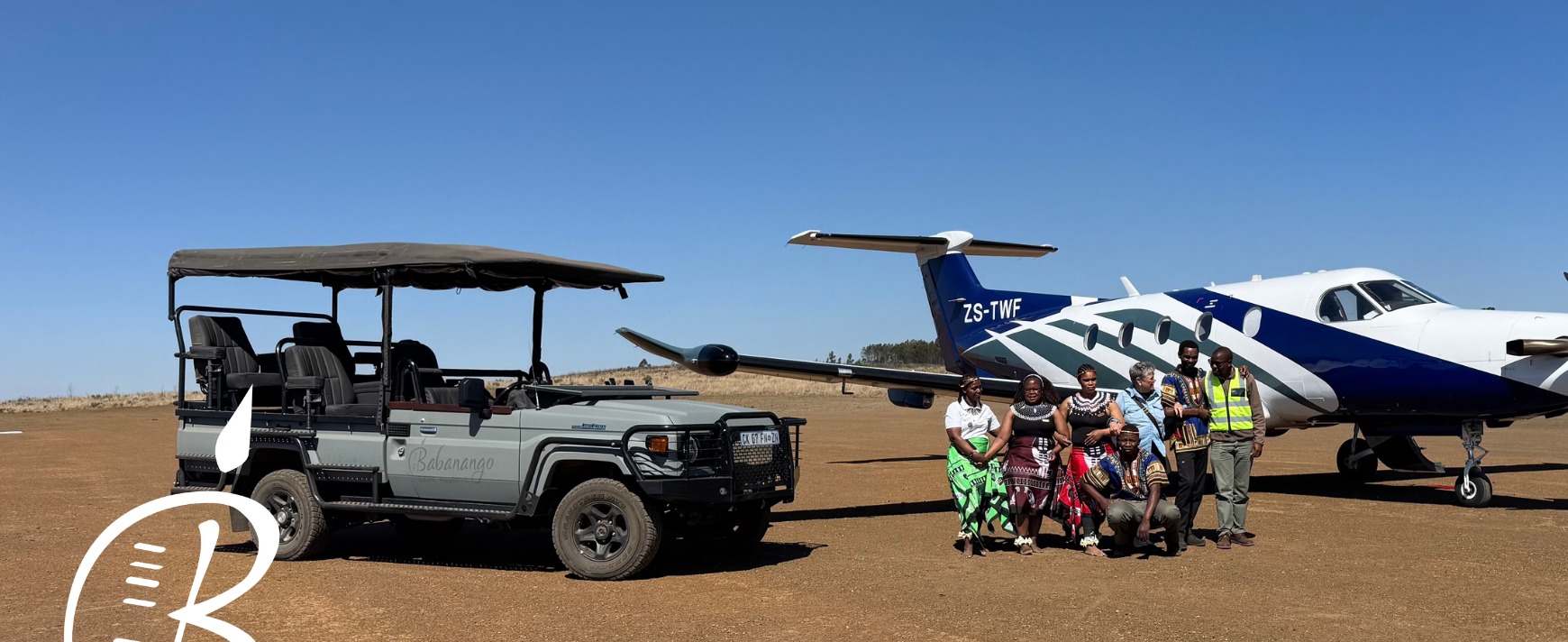
The safari vehicle meets the aircraft: Babanango’s new Eagle’s View Airstrip in Zululand.
A Shorter Road To The Wild
Eagle’s View Aerodrome sits inside the reserve itself, on runway 14/32, reference BRM, and now holds full Type A Aerodrome approval, granted by the CAA on 24 August 2026. Guests can fly in on scheduled or chartered aircraft and land within the reserve boundary, instead of facing the drive up from Durban or Richards Bay.
That trade-off, road time for air time, is one every remote reserve has to think carefully about. Cut the transfer and you risk cutting the sense of isolation that makes the destination worth visiting in the first place. Babanango’s bet is that Eagle’s View lets it do both: guests arrive faster, without the reserve feeling any less wild once they touch down.
“Ease of access is an important part of the safari experience,” says Darryl Erasmus, Chief Commercial Officer at Babanango Game Reserve. “Our new airstrip brings guests closer to the reserve from the moment they arrive. It opens exciting possibilities for fly-in safaris, private charters and more seamless itineraries for both domestic and international travellers.”
What This Signals For KwaZulu-Natal Tourism
An approved aerodrome is not a modest undertaking. It takes CAA certification, real infrastructure spend and a long-term bet on a specific kind of traveller. That a mid-sized, conservation-led reserve in Zululand has cleared that bar says something about the confidence building around KwaZulu-Natal as a serious, well-resourced safari destination in its own right, not a stop tacked onto a Kruger or Cape Town itinerary.
It also points to where the demand is coming from. Fly-in access speaks directly to international visitors with limited time, to private groups who want discretion and efficiency, and to corporate and incentive travel programmes that run on tight, predictable schedules. A scenic road transfer is a hard sell to a traveller with three days in the country who wants every one of them in the bush.
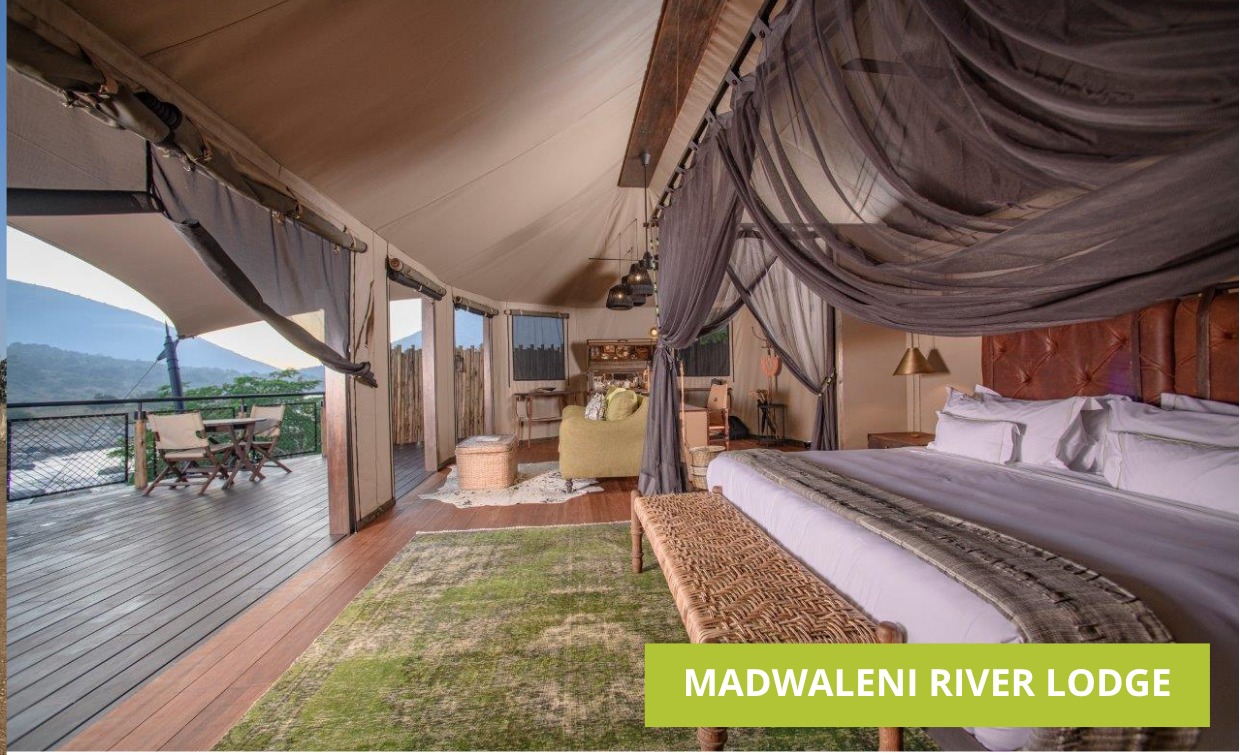
Madwaleni River Lodge, Babanango’s flagship ultra-luxury camp.
What It Means For Visitors
For guests booking a trip, the practical upside is straightforward: less time on the road, more time in the reserve, and the option to combine Babanango with other destinations across the region without losing a day to logistics. It also makes private, spontaneous travel easier, a charter built around a traveller’s own schedule rather than the reverse.
It doesn’t change what’s waiting once guests land. Babanango’s appeal has always rested on its lodge portfolio, and that range is exactly why the reserve suits such a broad mix of travellers: the flagship ultra-luxury Madwaleni River Lodge, the romantic Zulu Rock Lodge, the family-friendly Babanango Valley Lodge, the self-catering Matatane Camp, and the immersive walking safaris of Ogomeni Trails Camp. Eagle’s View is designed to get guests to that range faster, not to replace any part of it.
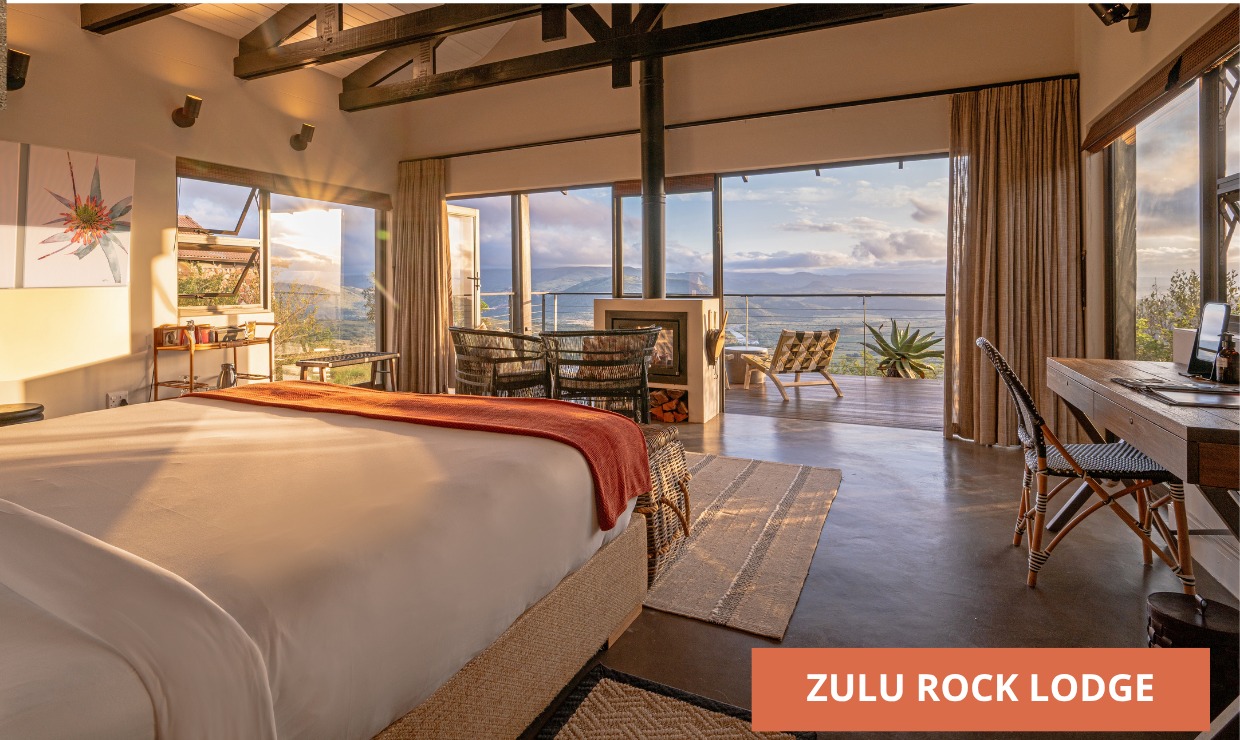
Zulu Rock Lodge, overlooking the reserve’s rolling Zululand valleys.
What It Means For The Reserve Itself
For Babanango, the airstrip is a competitive repositioning as much as a convenience. It strengthens the reserve’s case as an easily accessible Big Five destination at a moment when ease of access increasingly decides where international operators and agents choose to sell. It also broadens Babanango’s booking base, opening the door to corporate and incentive groups, special-interest travel, and bespoke programmes that depend on tight scheduling.
In a sector where remoteness is a selling point right up until it becomes a barrier to booking, Eagle’s View Airstrip lets Babanango keep the wilderness while removing the friction of reaching it, another step in making the reserve more accessible while retaining the sense of remoteness that defines the Babanango experience.

Babanango Valley Lodge, the reserve’s family-friendly base.
Eagle’s View Aerodrome: Quick Reference
| Location | Babanango Game Reserve, Zululand, KwaZulu-Natal, South Africa |
| Aerodrome | Eagle’s View Aerodrome |
| Reference | BRM – Babanango Game Reserve, Reserve Management |
| GPS | S 28° 17′ 06.74″ E 31° 03′ 35.77″ |
| Radio | 124.8 MHz |
| Runway | 14/32 |
| Approval | Type A Aerodrome |
| CAA Approval Number | 139/05/0178 |